Buying a used composite kayak can be exceptional value.
It can also be an expensive lesson.
At first glance, most second hand fibreglass or carbon fibre kayaks look fine. A few marks. Some cracking. Perhaps a previous repair.
The difficulty is this:
Surface appearance does not equal structural integrity.
Composite kayaks are layered laminate structures. Damage is not always obvious. And without a structured inspection approach, buyers often either overreact to harmless cosmetic wear or underestimate genuine structural risk.
Confidence does not come from experience alone.
It comes from inspection discipline.
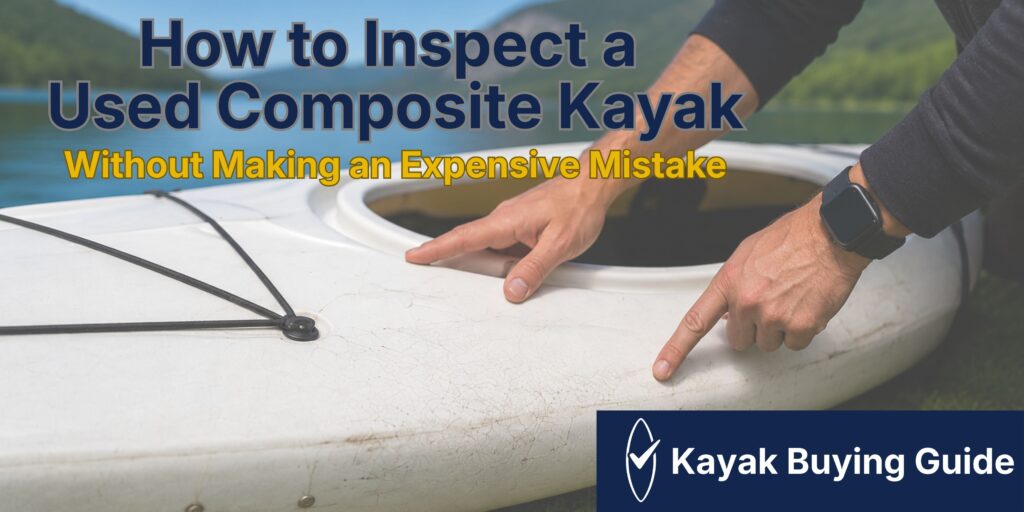
Why Composite Kayaks Are Easy to Misjudge
Composite kayaks are built from reinforcement fibres bonded in resin.
When those fibres are compromised, structural strength reduces. The problem for buyers is that laminate compromise is not always visually dramatic.
A hull can appear glossy and straight while hiding internal weakness.
Equally, visible surface cracking may affect only the outer cosmetic layer.
Distinguishing between the two is where most purchasing mistakes happen.
Without structure, buyers rely on instinct.
Instinct is unreliable when thousands are involved.
The Six Areas Every Buyer Must Assess
If you are buying a second hand composite kayak, there are six categories that must be evaluated.
Not glanced at.
Evaluated.
1. Pre Viewing Risk Signals
Before travelling to see a kayak, you should assess listing quality, photo transparency and repair disclosure.
Poor information often signals higher risk.
Serious buyers filter early.
2. Overall Hull Integrity
The hull tells a story.
You are not just looking for scratches.
You are assessing fairness, consistency and signs of stress.
Cosmetic wear and structural distortion are not the same.
Knowing the difference is critical.
3. High Load Zones
Certain areas of any composite kayak carry more mechanical stress than others.
Issues in these regions carry greater significance than cosmetic marks elsewhere.
Most buyers look everywhere equally.
They should not.
4. Previous Repairs
Repairs are common.
The key is not whether a kayak has been repaired.
The key is whether the repair restored integrity appropriately and whether the price reflects it.
Not all repairs are equal.
5. Structural Warning Signs
Composite kayaks sometimes reveal subtle warning signals that indicate internal compromise.
These are rarely obvious to inexperienced buyers.
Missing them is costly.
Misinterpreting them is equally costly.
6. Condition Versus Price
Finally, structural condition must be weighed against cosmetic appearance and asking price.
A cosmetically worn kayak with sound structure can be excellent value.
A polished kayak with compromised laminate rarely is.
Emotion distorts this stage more than any other.
Structure prevents it.
Why Buyers Make Expensive Mistakes
They:
- Rush
- Trust surface appearance
- Rely on seller reassurance
- Forget to check key areas
- Confuse cosmetic damage with structural failure
- Make decisions under pressure
Composite kayaks reward discipline.
They expose guesswork.
Why a Structured Kayak Inspection Checklist Matters
Inspection is not about memorising tips.
It is about following the right sequence, every time.
A structured kayak inspection checklist ensures you:
- Review the correct areas
- Separate cosmetic from structural properly
- Evaluate repairs calmly
- Apply logical value judgement
- Make a confident decision
When you are about to spend thousands on a used composite kayak, memory is not enough.
You need order.
Frequently Asked Questions
Are gelcoat cracks serious on a used kayak?
Sometimes yes. Often no. The significance depends on what lies beneath the surface. Proper assessment requires structured inspection rather than assumption.
Is it safe to buy a repaired composite kayak?
It can be. The risk depends on repair quality, location and price alignment. Without structured evaluation, this is difficult to judge accurately.
How long do composite kayaks last?
Well built composite kayaks can last decades when properly stored and maintained. Longevity depends on construction quality, usage and care.
Inspect With Structure, Not Instinct
Second hand composite kayaks can represent outstanding value.
But only when inspected correctly.
You do not need to be an engineer.
You need a system.
The Confident Buyer Checklist converts this method into a structured inspection companion you can use while viewing a kayak.
If you are serious about avoiding an expensive mistake, inspect with structure.
View the Confident Buyer Checklist here.